Every unit.
Every tenant.
One workspace.
TallyDue helps property managers and landlords keep properties, units, tenants, leases, charges, invoices, payments, and reports in one operational workspace.

Clear records before collection pressure
Rent collection becomes easier to review when the tenant, unit, lease, charge, invoice, and payment record are connected.
Take a look around.
Explore properties, units, tenants, and leases with live demo records. The full app opens in a new tab.
Inside TallyDue
Explore the TallyDue workspaces.
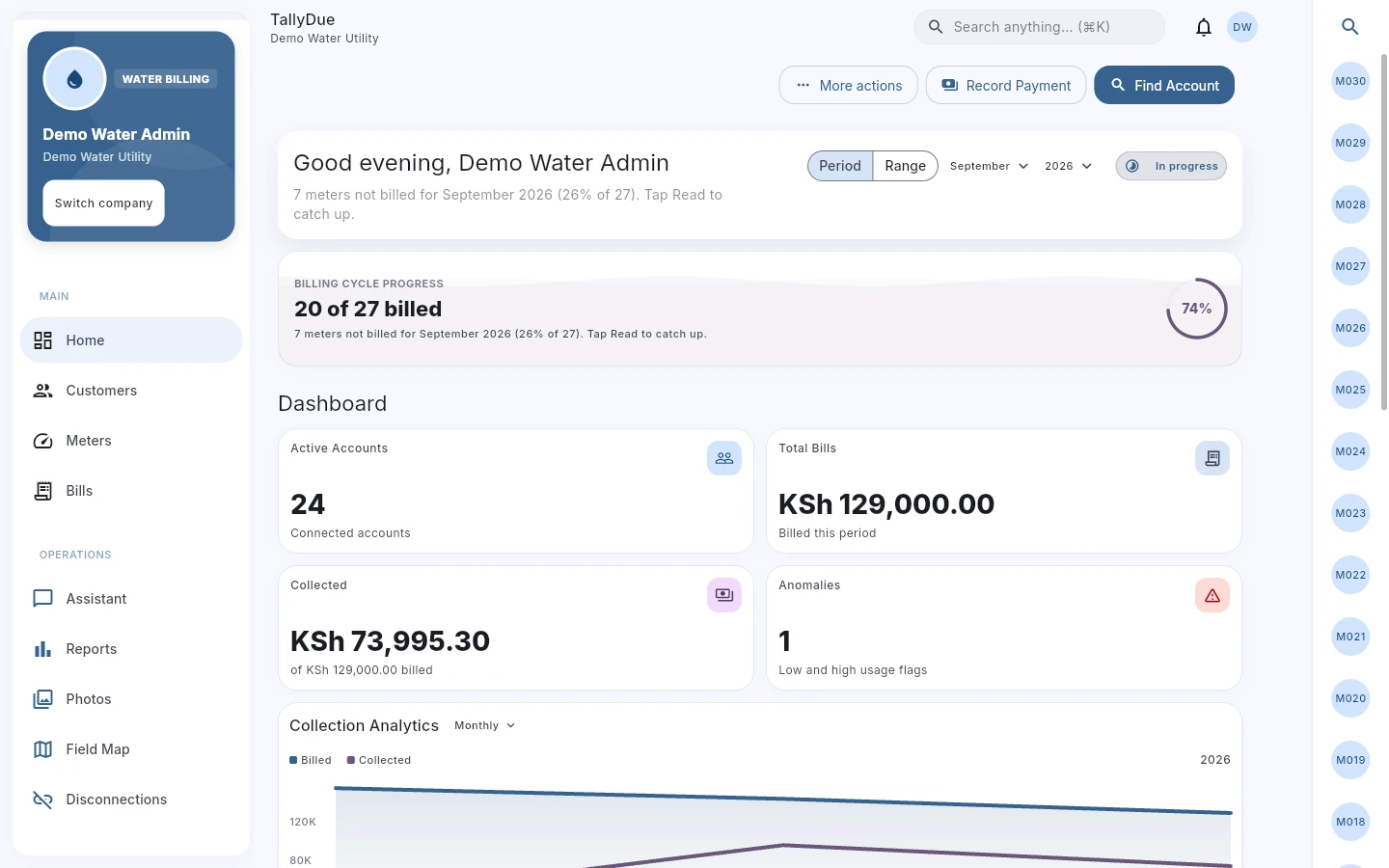
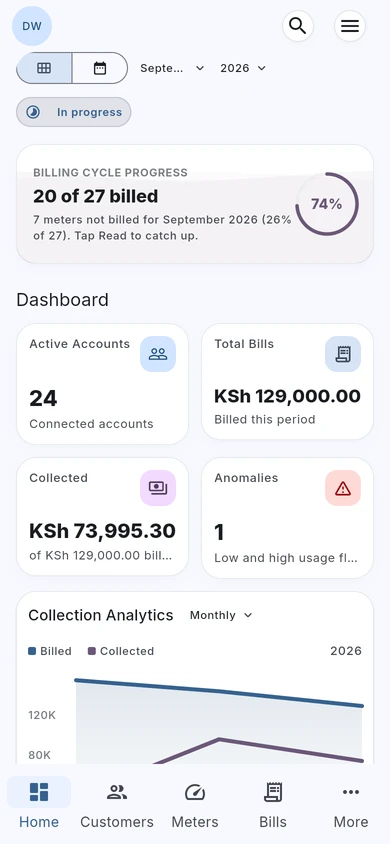
Water billing, with the full picture.
Review billing progress, amounts billed, collections, and consumption alerts from the water dashboard.
Actual TallyDue web app · Demo data
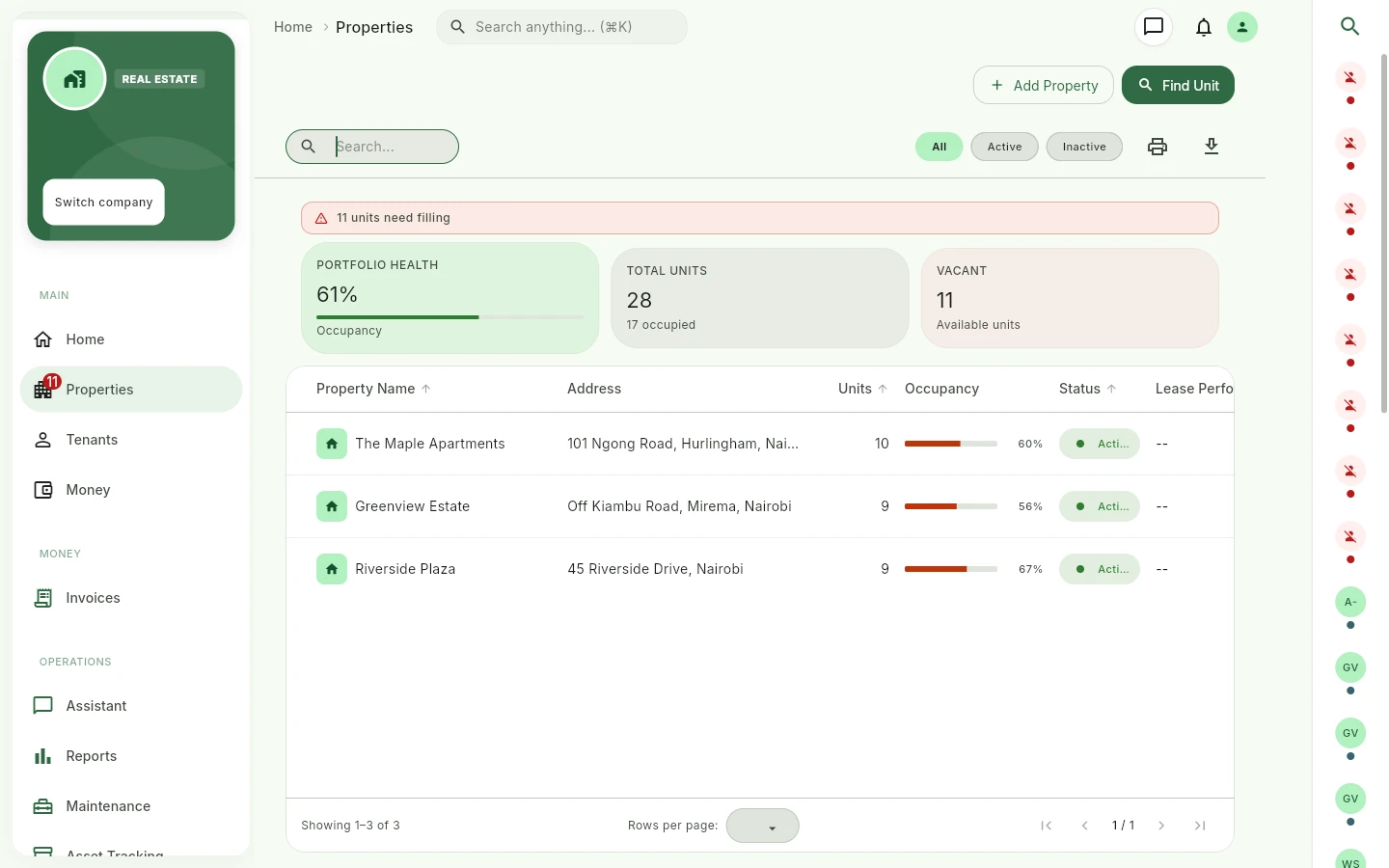
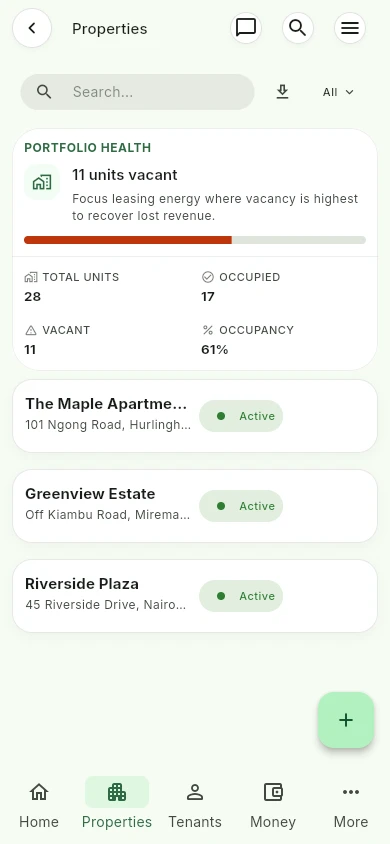
See every property in one view.
Review properties, occupied and vacant units, and portfolio occupancy before following up with your team.
Actual TallyDue web app · Demo data
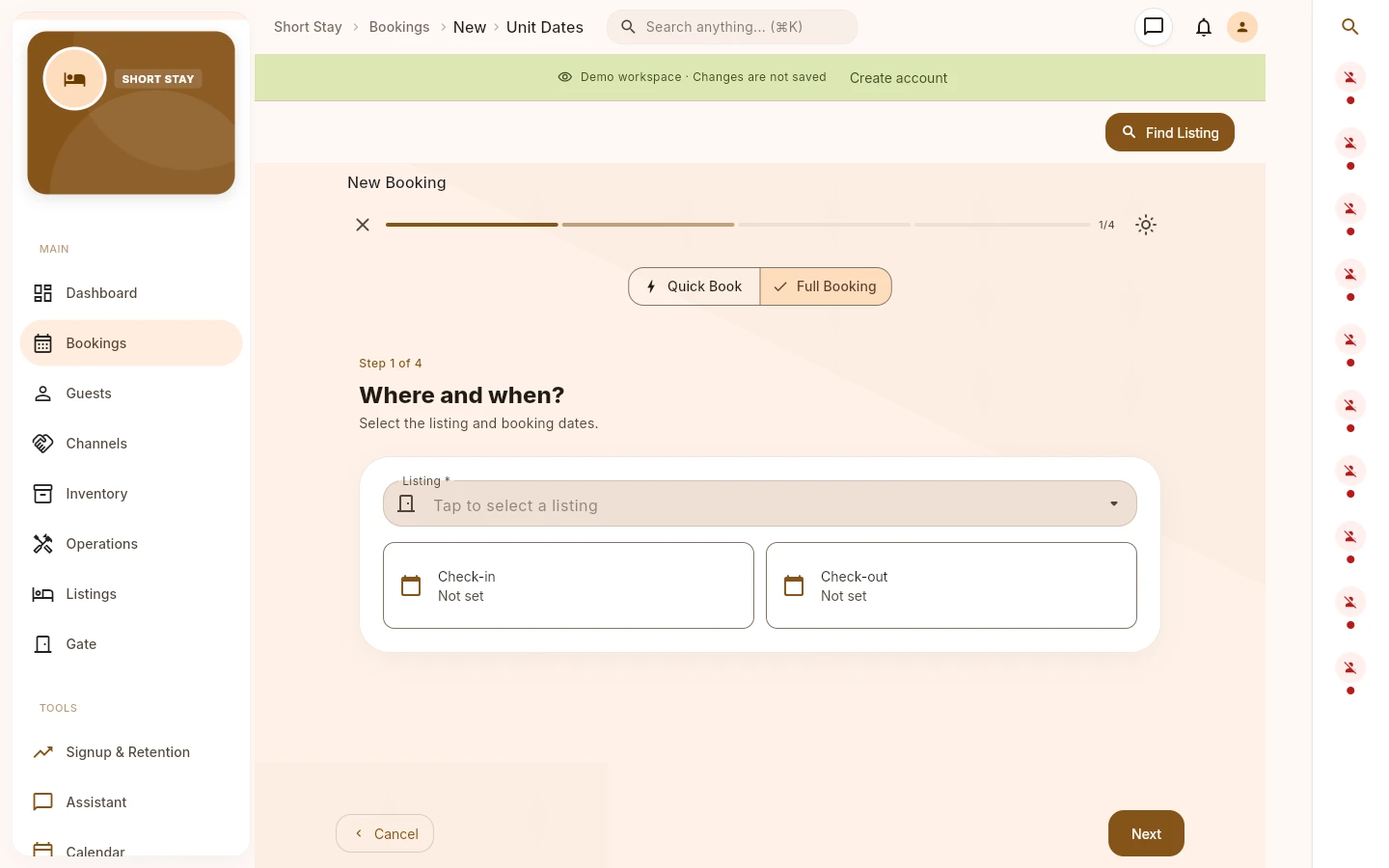
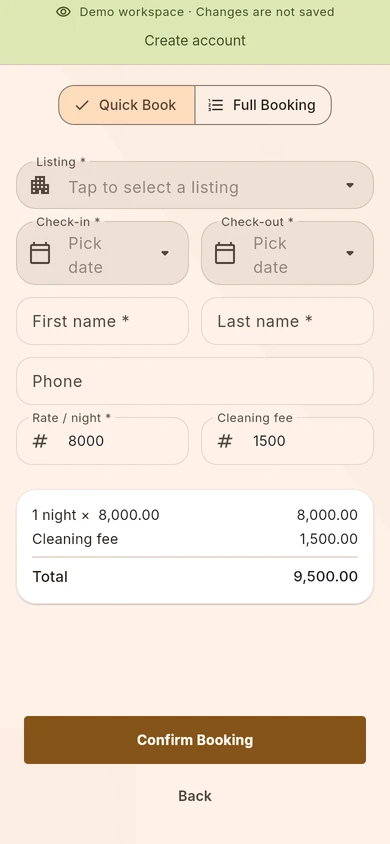
Give every booking a clear start.
Choose a listing and check-in and check-out dates in a guided booking flow, with quick and full booking options.
Actual TallyDue web app · Demo data
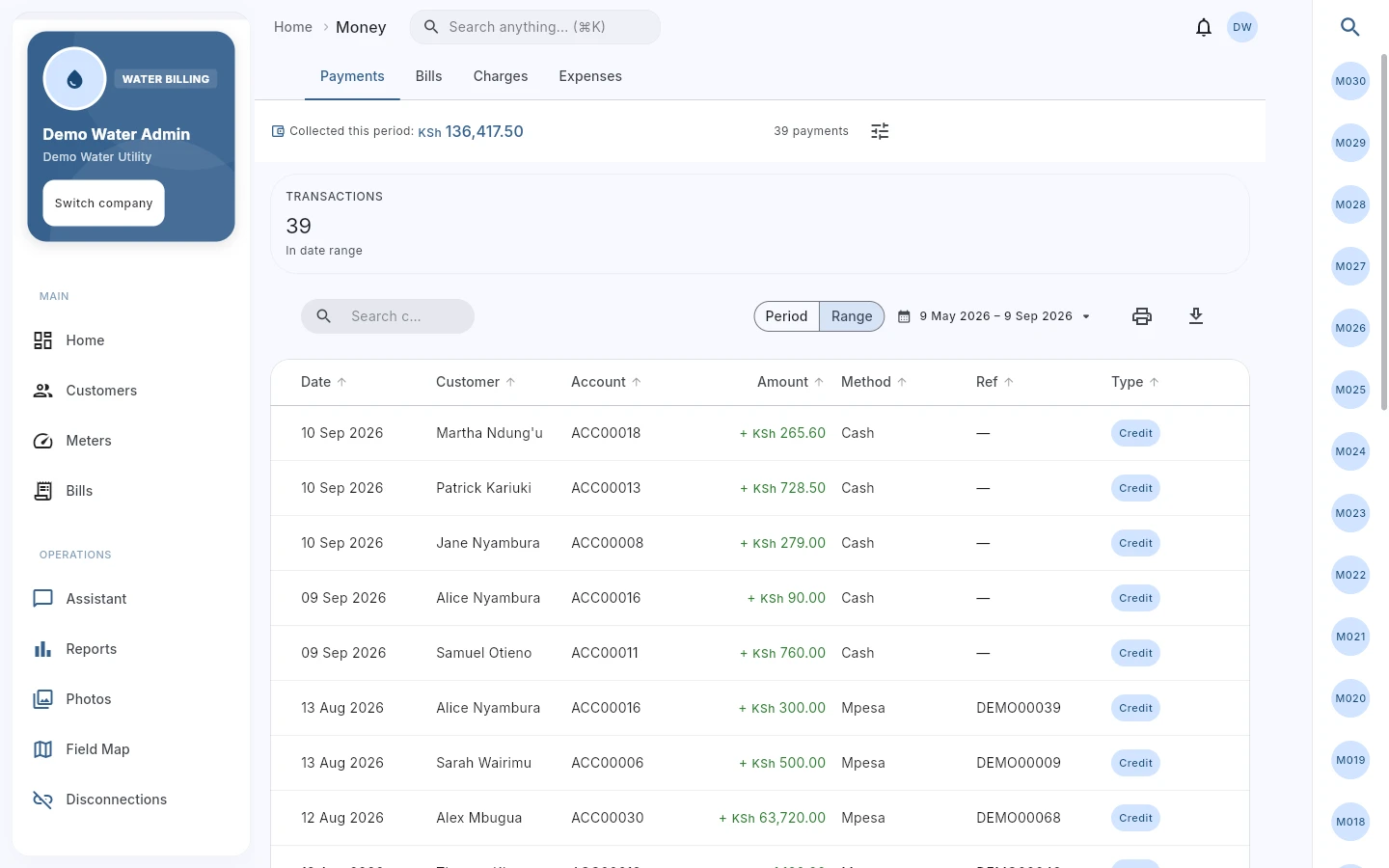
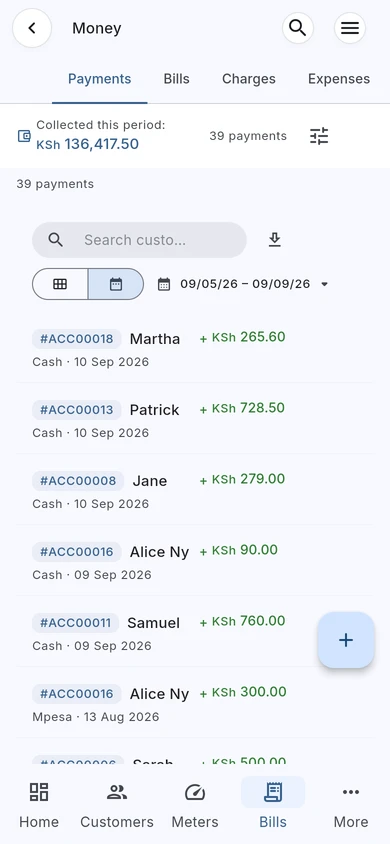
Follow the payment back to the account.
Review payment records and references in Money, with customer and billing context close at hand.
Actual TallyDue web app · Demo data

What TallyDue organizes
Property work is not only rent collection. The record behind each payment matters.
TallyDue gives teams a structured way to set up properties, add units, onboard tenants, manage leases, create charges, review invoices, and track payments. It is built for teams that need the office, finance, and management view to stay aligned.
- Keep tenant and unit records searchable.
- Review leases and rent charge context before recording payments.
- Use money views for charges, invoices, payments, and finance activity.
- Connect property operations with water billing when the same team handles both.
Property workflows covered
| Property setup | Add properties, units, and setup details so the team can manage occupancy and billing from known records. |
|---|---|
| Tenant onboarding | Create tenant records, move tenants into units, and keep the tenant context attached to leases and finance activity. |
| Lease management | Review lease information, tenancy context, dates, unit assignment, and related charges before collection work begins. |
| Charges and invoices | Use billing setups, charges, invoices, balances, and due details to make rent and related charges easier to review. |
| Payments | Record or review payment records with tenant, unit, amount, method, reference, and status where your role allows it. |
| Reports | Use reports and finance views to understand arrears, collected amounts, and records needing attention. |

Who it fits
Property managers use TallyDue to track units, tenants, leases, charges, invoices, and payments in one place.
Landlords and estate managers use it to get a clearer view of what is occupied, what is due, and what has been paid.
Finance teams use it to review payments, balances, invoices, and supporting references before reporting.
TallyDue for iOS, Android, and web
At your desk.
On your phone.
With your team.
Check properties, units, tenants, and lease records from your phone or desk. Give your property team the choice of iOS, Android, and web access.
iPhone & iPad


Scan for the App Store
Android


Scan for Google Play
Show download QR codes
iPhone & iPad
Android
Working from a computer? Open TallyDue on the web ↗
Related pages and guides
Questions property teams ask
Can TallyDue support mixed property and water operations?
Yes. TallyDue includes water billing and real estate workspaces, which helps teams that manage utilities and property records together.
Does TallyDue force one billing method?
No. Billing details depend on how your company configures setups, charge items, payment methods, roles, and review workflows.
Is this only for large property managers?
No. The same record structure helps smaller landlords and larger teams because the core job is the same: know the unit, tenant, lease, charge, invoice, and payment status.